Simplifying OOP in Java: Interfaces
A simple introduction to interfaces in Java, showing how they define a contract that different classes can implement in their own way.
April 25, 2026·2 ደቂቃ ንባብ·koofkee
Day 9: Interfaces
After abstraction, the next important step is understanding interfaces.
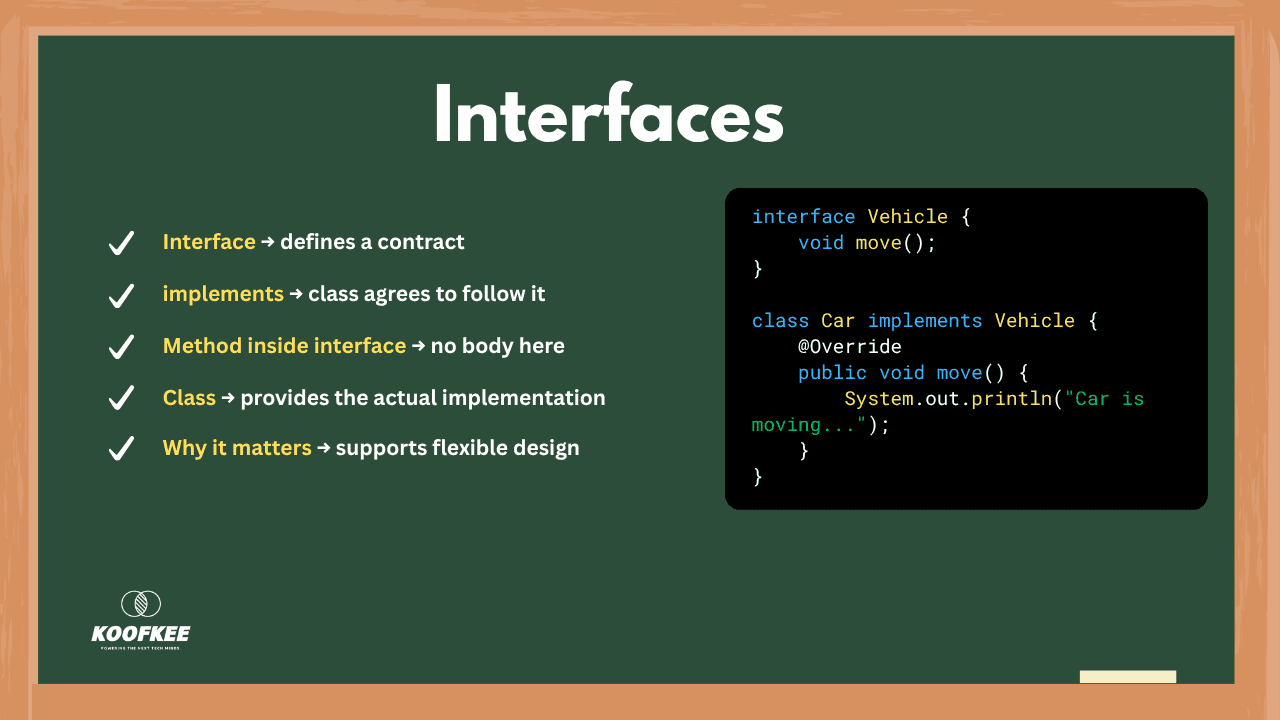
An interface defines a contract. It tells a class what behavior it must provide, without giving the full implementation itself.
In Java, a class uses the implements keyword to follow that contract.
interface Vehicle {
    void move();
}

class Car implements Vehicle {
    @Override
    public void move() {
        System.out.println("Car is moving");
    }
}
In this example, the interface Vehicle defines the method move().
The Car class then implements that interface and provides the actual behavior.
This is what makes interfaces useful. They create a shared structure while still allowing different classes to behave in their own way.
Java, OOP, Interfaces, Software Engineering, Computer Science, Beginner Java, Koofkee