Simplifying OOP in Java: Polymorphism
A simple introduction to polymorphism in Java, showing how one parent reference can represent different child objects and produce different behavior.
April 23, 2026·2 min di lettura·koofkee
Day 7: Polymorphism
After inheritance and method overriding, the next important step is understanding polymorphism.
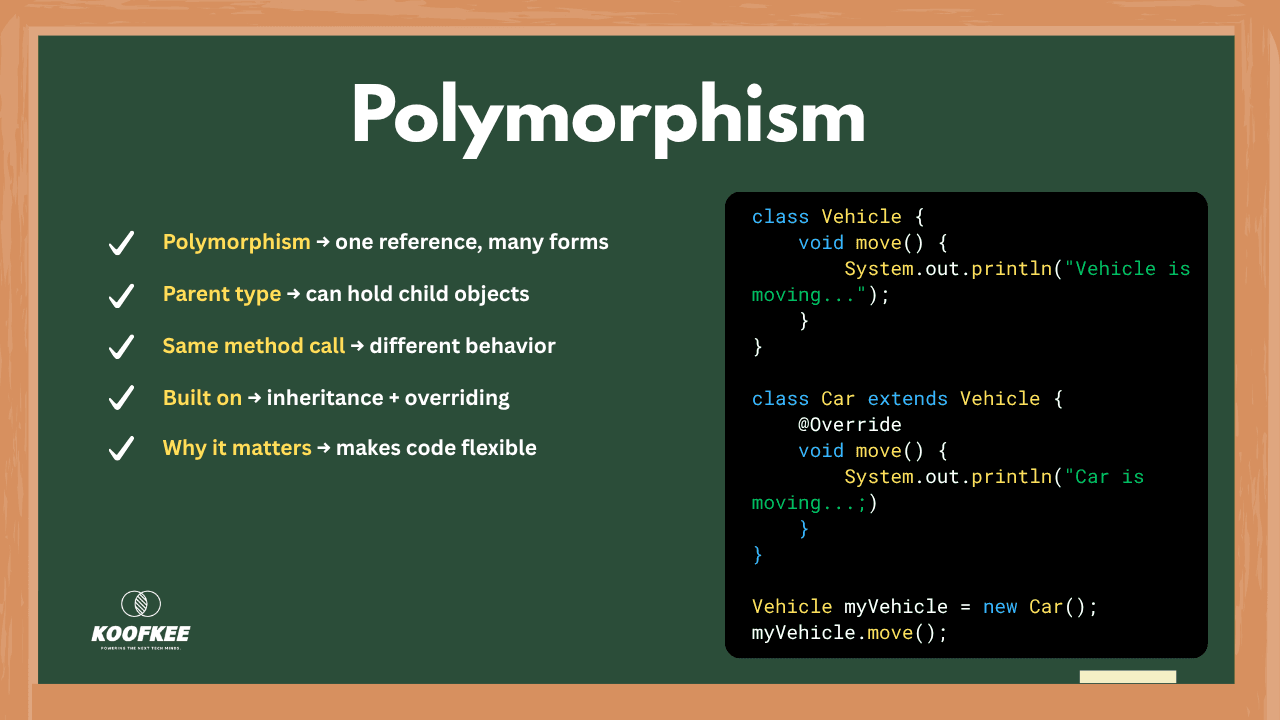
Polymorphism means one reference can take many forms.
In Java, this happens when a parent type is used to refer to a child object.
class Vehicle {
    void move() {
        System.out.println("Vehicle is moving");
    }
}

class Car extends Vehicle {
    @Override
    void move() {
        System.out.println("Car is moving");
    }
}

Vehicle myVehicle = new Car();
myVehicle.move();
In this example, myVehicle has the type Vehicle, but it actually refers to a Car object.
So when move() is called, Java uses the version inside Car.
This is what makes polymorphism powerful. The same method call can produce different behavior depending on the actual object being used.
Java, OOP, Polymorphism, Inheritance, Method Overriding, Software Engineering, Computer Science, Beginner Java, Koofkee