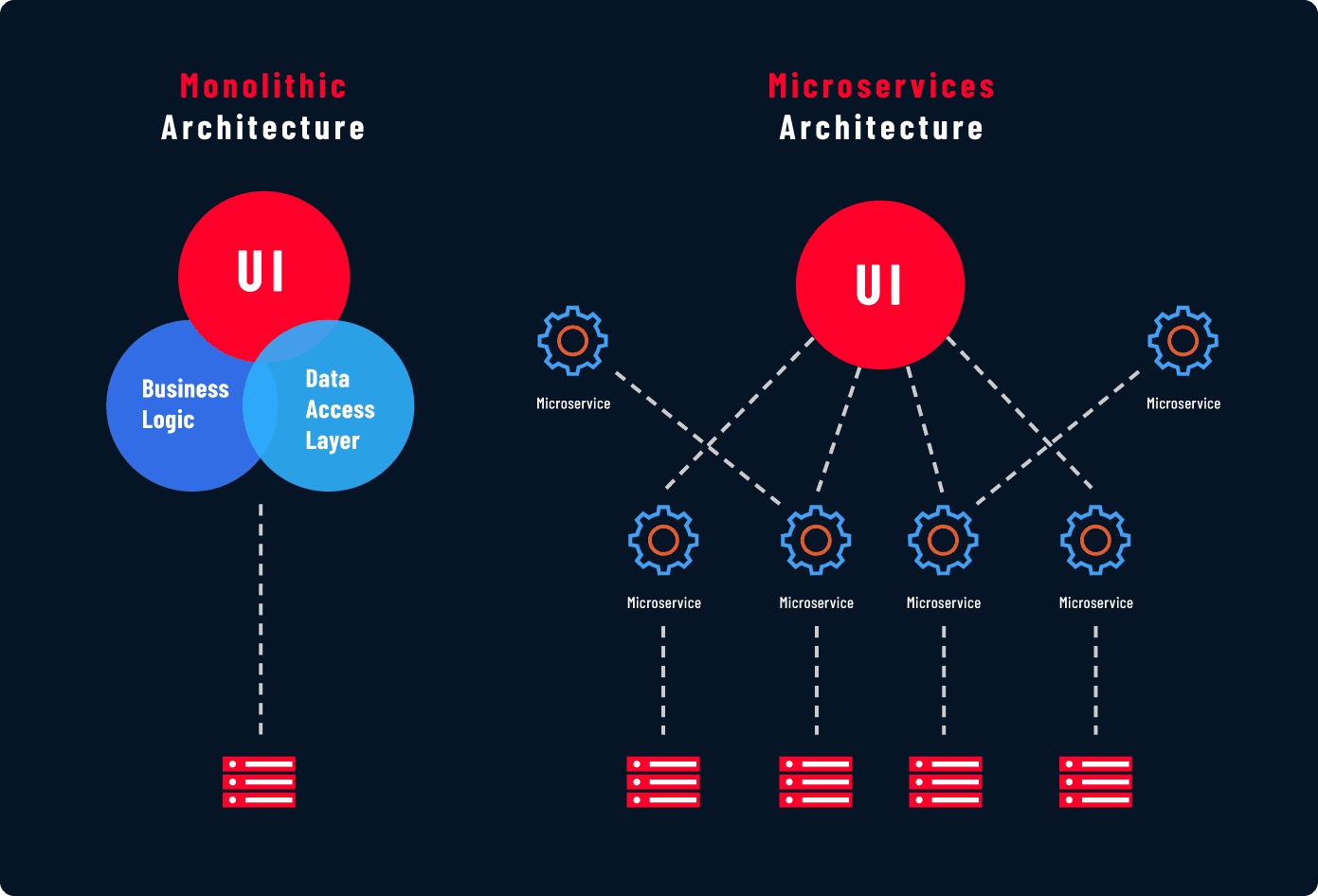
Microservices vs Monolithic Architecture
Microservices and monolithic architecture are two common ways to structure modern applications. Understanding their trade-offs helps developers make better system design decisions.
Microservices vs Monolithic Architecture
As applications grow, one important architectural decision developers face is how to structure the system behind the software.
Two common approaches are Monolithic Architecture and Microservices Architecture.
What is Monolithic Architecture?
A monolithic application is built as a single unified codebase.
This means:
- All features live in one project
- The frontend, backend logic, and database interactions are tightly connected
- The application is deployed as one unit
Advantages of Monolithic Architecture
- Easier to build for small projects
- Simpler local development setup
- Straightforward deployment process
- Good for early-stage startups and MVPs
Challenges of Monolithic Architecture
- Harder to scale specific parts independently
- Large codebases become difficult to maintain
- Small changes may require redeploying the whole system
- Team collaboration can become harder as the project grows
What is Microservices Architecture?
Microservices break an application into multiple smaller services.
Each service:
- Handles one specific business responsibility
- Runs independently
- Can be deployed separately
- Often has its own database or storage layer
Examples:
- Authentication Service
- Payment Service
- Notification Service
- User Management Service
Advantages of Microservices
- Better scalability
- Independent deployment
- Easier team ownership of services
- Improved fault isolation
- Flexibility to use different technologies per service
Challenges of Microservices
- More infrastructure complexity
- Harder debugging and monitoring
- Requires service communication management
- Deployment and DevOps become more advanced
Which One Should You Choose?
There is no universal best choice.
A monolith is often the right choice when:
- Building an MVP
- Working solo or in a small team
- The product is still evolving rapidly
- Infrastructure simplicity matters
Microservices become attractive when:
- The system grows large
- Teams scale up
- Independent deployment is needed
- Certain services need separate scaling
Final Thought
Microservices are not automatically better.
Many developers rush toward microservices too early.
In practice, a well-structured monolith is often better than poorly designed microservices.
The best architecture is the one that matches your current needs, team size, and system complexity.
Choose based on context, not hype.